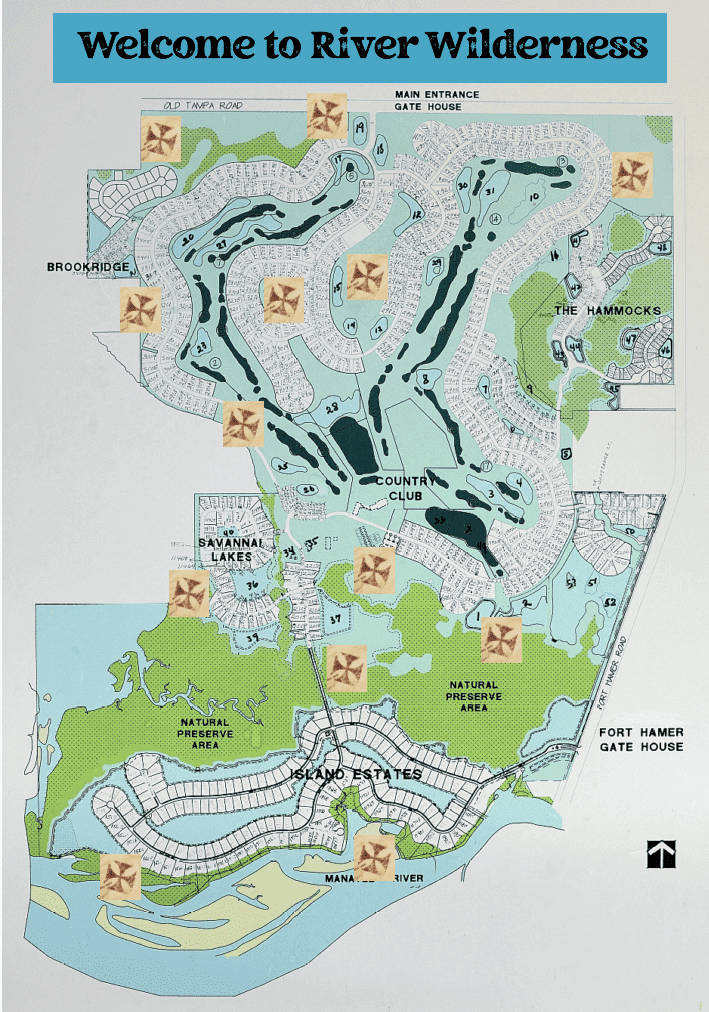
Leaf Scavenger Hunt:
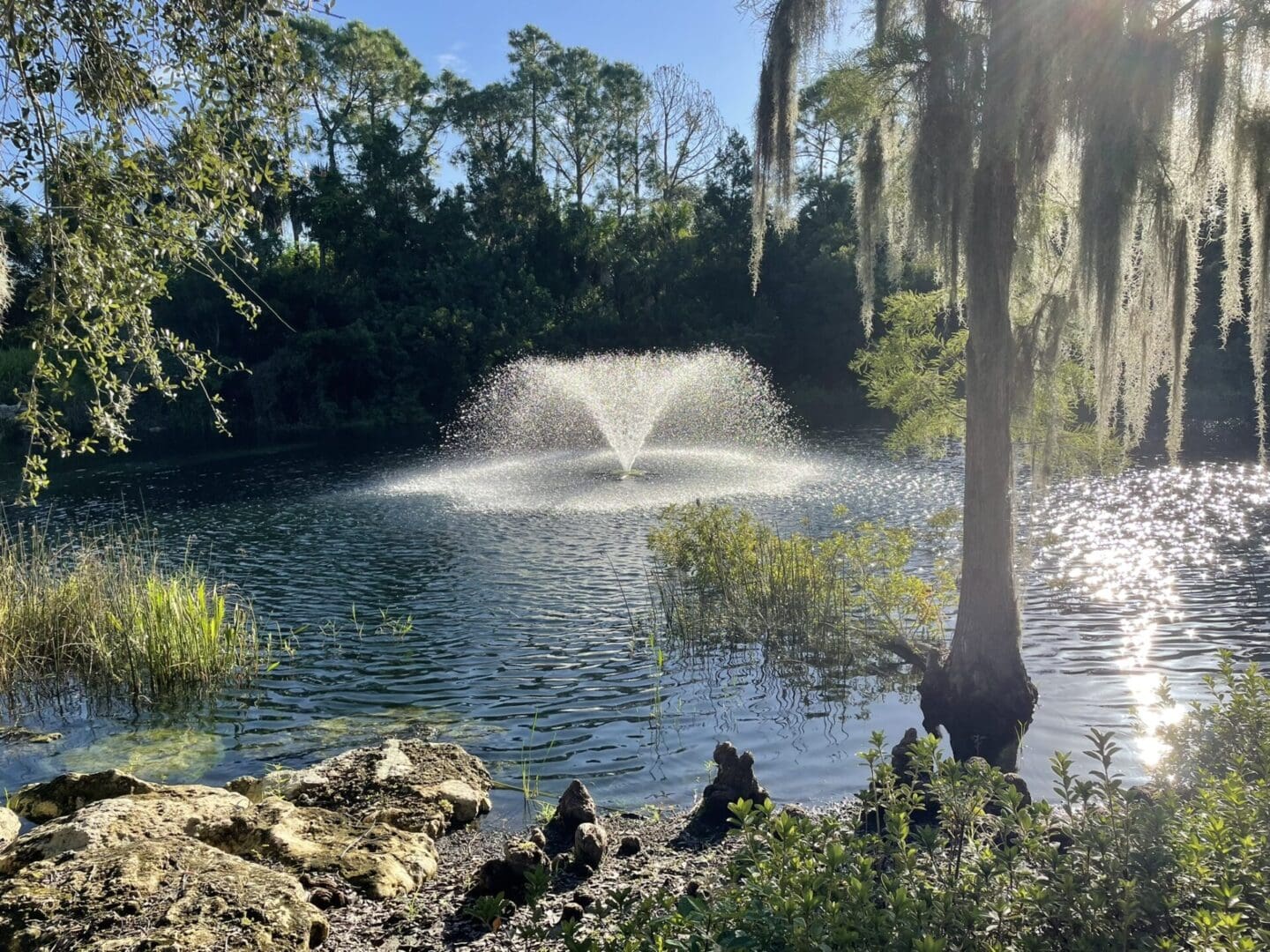
- Theme: The River Wilderness area in Florida features a variety of trees, including both evergreen and deciduous species, depending on the specific habitat within the area. Common trees include pines like longleaf and slash pine, oaks like water oak, and trees adapted to wetland conditions like bald cypress.
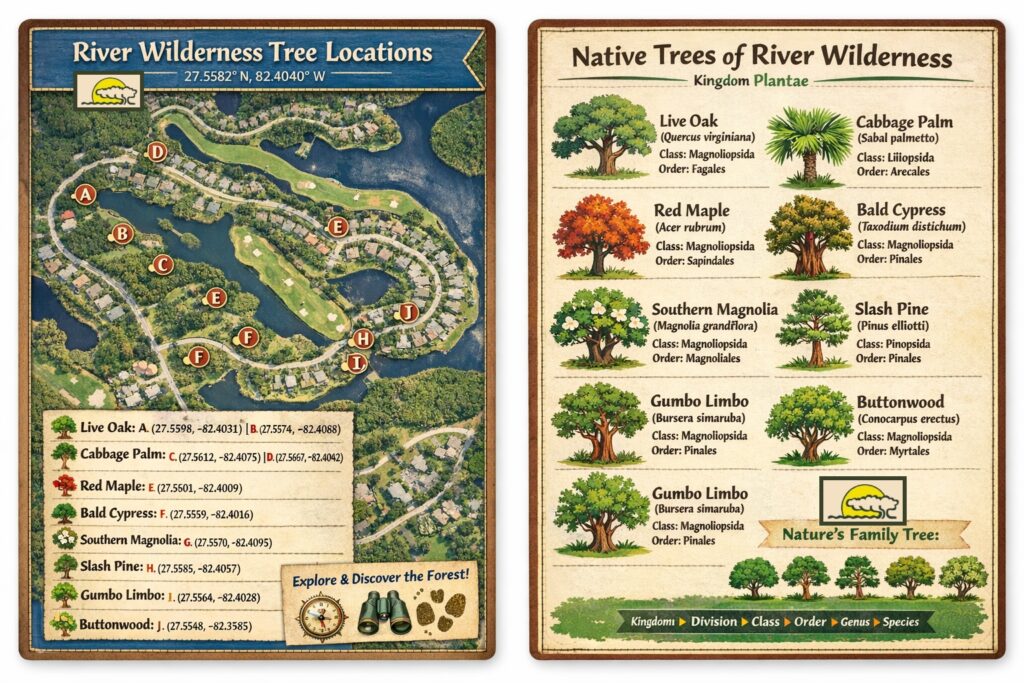
- Items to Collect: Explore the natural trees specific to our RW area! We have already collected details about these trees which will help you identify the trees in River Wilderness!
- You are welcome to collect leaves be sure to stay off of other people’s property while doing this one. Safely taking a leaf for your collection from the ground.
- Leaves of different colors, pine cones, smooth rocks, different types of flowers, feathers, etc
- Taking photos the the leaf and take another of the bark. Watch where you are going and try to get a photograph of the whole tree.
- Write down where you found the items you collected, and the date.
Please see the General Scavenger Hunt Rules
Tree Scavenger Hunt
Explore • Discover • Protect Our Natural Home
Welcome to the River Wilderness Native Tree Scavenger Hunt!
Did you know that the beautiful landscape around River Wilderness is filled with native Florida trees that support birds, butterflies, and wildlife along the Manatee River?
This fun outdoor adventure invites kids, families, teens, and nature-loving adults to explore the neighborhood and see how many native trees they can find!
Grab your checklist, bring a friend, and head out for a nature treasure hunt.
🌳 How the Hunt Works
1️⃣ Download or print any of the fun Checklists
2️⃣ Walk, bike, or golf-cart around the RW community
3️⃣ Look for the trees on the list
🏆 Challenge Levels
- Explorer: Find 5 trees
- Naturalist: Find 10 trees
- River Wilderness Ranger: Find all the trees on the list!
Bonus points if you take fun photos or “aura framed” selfies with each tree!
🔍 Native Trees to Find
🌿 1. Live Oak
Clue:
“With twisting arms and branches wide,
Spanish moss likes to hang and hide.”
Look for the majestic Live Oak — one of Florida’s most iconic trees.
Fun fact: Some live oaks can live over 300 years!
🌿 2. Cabbage Palm
Clue:
“Tall and proud with leaves that fan,
Florida picked me as its state tree plan!”
Search for the Cabbage Palm.
Fun fact: This is Florida’s official state tree.
🌿 3. Red Maple
Clue:
“In fall I glow a fiery red,
My leaves look like stars overhead.”
Look for the Red Maple near wetter areas.
🌿 4. Bald Cypress
Clue:
“I grow near water, tall and grand,
My knees pop up right from the land.”
Find the fascinating Bald Cypress.
Fun fact: The “knees” help the tree breathe in swampy soil.
🌿 5. Southern Magnolia
Clue:
“Big white flowers smell so sweet,
Glossy leaves beneath your feet.”
Look for the elegant Southern Magnolia.
🌿 6. Slash Pine
Clue:
“My needles grow in bundles three,
Many woodpeckers visit me.”
Search for the Slash Pine.
🌿 7. Gumbo Limbo
Clue:
“My bark looks red and likes to peel,
Like sunburnt skin you sometimes feel.”
Find the unique Gumbo Limbo.
🌿 8. Buttonwood
Clue:
“Near salty water I like to grow,
My round seed buttons hang down low.”
Look for Buttonwood near coastal areas.
📸 Photo Challenge
Make the hunt even more fun!
Take a picture with each tree you find:
🌳 Hug the trunk
🌿 Frame the leaves
📷 Take a group selfie
✨ Try an aura-style nature photo frame
Share your photos with neighbors and inspire others to explore!
🦋 Why Native Trees Matter
Native trees around River Wilderness help:
• Protect the Manatee River
• Provide homes for birds and butterflies
• Support pollinators
• Reduce stormwater runoff
• Keep Florida’s natural beauty thriving
When we learn about native trees, we become better stewards of our community and environment.
🌟 Community Challenge
Can your family find every tree on the list?
Encourage neighbors, visiting grandkids, and new residents to try the River Wilderness Native Tree Hunt.
You might discover your new favorite tree.
✅ Tip for Parents & Grandparents
Turn the hunt into a learning adventure:
Ask kids questions like:
- Which tree is the tallest?
- Which one smells the best?
- Which one do birds like most?
Natural curiosity is the best teacher.